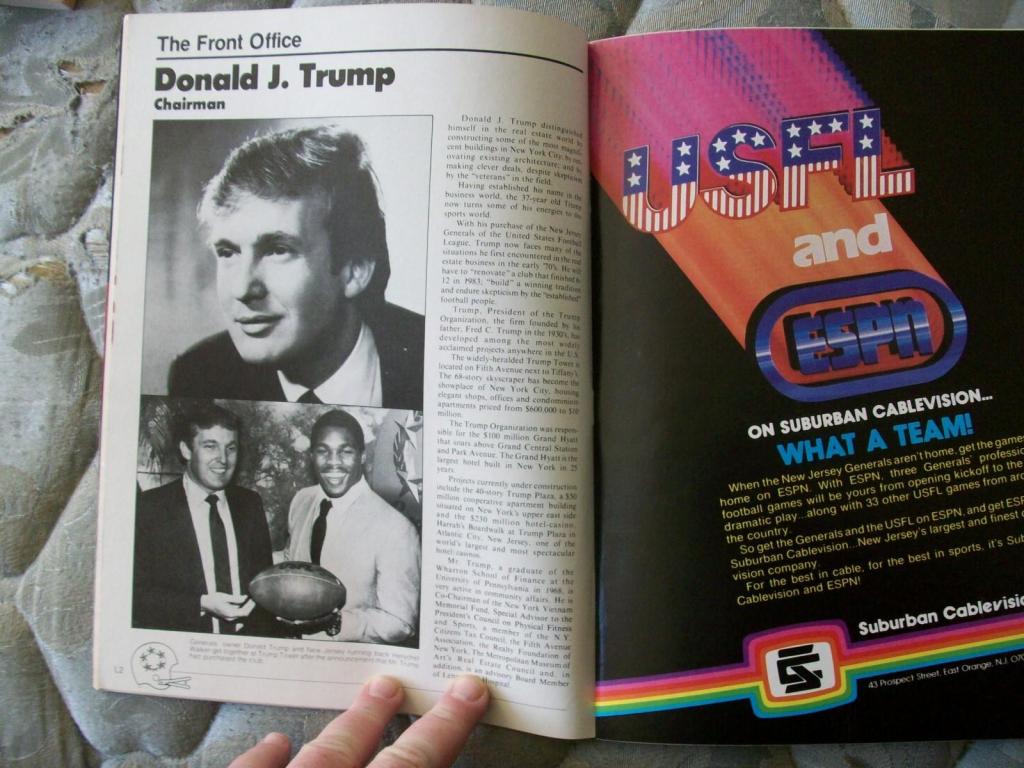
Herschel Walker. Steve Young. Jim Kelly. Reggie White. Donald Trump. For three unforgettable seasons, the United States Football League believed it could change professional football forever.
There was a time when the NFL wasn’t the only game in town.
In the spring of 1983, a new professional football league arrived with a pretty ambitious idea: give football fans something to watch when the NFL wasn’t playing.
It was called the United States Football League, and initially, it seemed like a brilliant idea.
The USFL had big television contracts, recognizable owners, major college stars, and enough money to attract some of the biggest names in football.
It also had something else.
An almost unbelievable amount of ambition.
For three seasons, the USFL provided an alternative to the NFL. And for a brief moment, it looked like the upstart league might actually become a permanent part of America’s sports landscape.
Then came Donald Trump, a billion-dollar dream, a courtroom showdown, and one of the strangest endings in sports history.
A Different Kind of Football
The original idea behind the USFL came from businessman David Dixon, who envisioned a professional football league that would play in the spring.
The timing made sense.
The NFL owned the fall and winter. College football dominated Saturdays. Why not give fans professional football during the warmer months?
The league launched in 1983 with 12 teams, including the New Jersey Generals, Tampa Bay Bandits, Philadelphia Stars, Birmingham Stallions, Michigan Panthers, and Los Angeles Express.
ABC and ESPN signed television agreements, giving the league national exposure right out of the gate.
And the football was legitimate.
The USFL wasn’t interested in filling rosters with players nobody had heard of. It wanted stars, and it was willing to spend money to get them.
One of its first major victories came when the New Jersey Generals signed Georgia running back Herschel Walker, the reigning Heisman Trophy winner.
Walker received a three-year contract worth approximately $3.25 million, an enormous commitment at the time.
The message was clear: the USFL was serious.
The Stars Who Made It Special
The league quickly became a destination for some of the best players in college football.
Herschel Walker became the face of the New Jersey Generals.
The Pittsburgh Maulers signed Heisman Trophy winner Mike Rozier.
The Houston Gamblers would eventually feature a young Jim Kelly, while the Los Angeles Express landed BYU quarterback Steve Young with an extraordinary contract.
And then there was Reggie White.
Before becoming one of the most dominant defensive players in NFL history, White established himself as a superstar with the Memphis Showboats.
The USFL also attracted legendary coaches and personalities, including George Allen, Steve Spurrier, and Marv Levy.
In 1985, Boston College quarterback Doug Flutie became another major signing when he joined the New Jersey Generals.
Think about that collection of talent.
Herschel Walker. Jim Kelly. Steve Young. Reggie White. Doug Flutie.
These weren’t forgotten football players. They were future NFL legends.
The league was producing real football, and fans were paying attention.
Enter Donald Trump
In September 1983, New York real estate developer Donald Trump purchased the New Jersey Generals for approximately $10 million.
Trump had no interest in simply owning a spring football team.
He wanted to compete with the NFL.
His vision was considerably bigger than the original concept behind the USFL. Rather than remain a spring alternative, he believed the league should move its schedule into the fall and compete directly against the NFL.
It was an aggressive strategy.
Trump believed the USFL could challenge the NFL for television audiences, attract more attention, and eventually force a merger or create opportunities for USFL franchises to join the established league.
Not everyone agreed.
Some owners believed the spring schedule was precisely what made the USFL valuable. Competing against the NFL meant going head-to-head with an established television giant that had decades of relationships and enormous financial resources.
But the league’s owners ultimately voted to move to the fall beginning in 1986.
The die was cast.
The Beginning of the End
The decision to move to the fall created enormous problems.
The USFL had built its television relationships around spring football. ABC and ESPN were important partners, and the league suddenly found itself jeopardizing those arrangements.
Several franchises relocated or merged. Others struggled financially.
The Chicago Blitz disappeared. The Philadelphia Stars moved to Baltimore. The Pittsburgh Maulers lasted just one season.
Meanwhile, the league continued spending heavily on players.
Steve Young’s contract with the Los Angeles Express reportedly reached $40 million over multiple years, an extraordinary figure for the era.
The irony was difficult to ignore.
The USFL had assembled some of the most talented rosters in professional football, but its financial foundation was becoming increasingly unstable.
The 1985 season became the league’s last spring campaign.
The Baltimore Stars defeated the Oakland Invaders 28-24 in the championship game on July 14, 1985.
There would be no 1986 season.
At least, not the one the owners had originally envisioned.
The $3 Lawsuit
With the league’s future increasingly uncertain, the USFL decided to take its fight directly to the NFL.
In 1984, it filed an antitrust lawsuit accusing the NFL of monopolistic practices, particularly involving television contracts and competition.
The case eventually went to trial in 1986.
The USFL sought approximately $1.69 billion in damages, arguing that the NFL had used its enormous market power to prevent meaningful competition.
The jury actually sided with the USFL on an important point.
It found that the NFL had willfully maintained monopoly power.
But there was a catch.
The jury awarded the USFL just $1 in damages.
Under antitrust law, that amount was automatically tripled.
The final award?
Three dollars.
Yes, the league that had challenged the NFL for control of professional football walked away from its courtroom victory with enough money to buy a couple of hot dogs at the stadium.
The legal victory changed nothing.
The USFL suspended operations in August 1986, before ever playing its planned fall season.
The NFL survived. The USFL did not.
The Legacy of the League That Almost Was
It’s easy to remember the USFL as a failed business experiment.
But that misses the bigger picture.
The league gave fans a spring football alternative, helped introduce future NFL superstars to professional football, and demonstrated that there was room for innovation in a sport that had become increasingly dominated by one organization.
Several USFL alumni went on to become NFL legends.
Steve Young and Jim Kelly became Hall of Fame quarterbacks. Reggie White became one of the greatest defensive players ever. Herschel Walker became one of the most recognizable athletes of his generation.
And the league itself left behind a fascinating collection of football history.
It also provided a lesson that professional sports owners would be wise to remember: having the best players, the biggest personalities, and the most ambitious plans doesn’t necessarily mean you have a sustainable business.
The USFL wanted to take down the NFL.
For three seasons, it gave the football world a pretty entertaining reason to believe it might.
But in the end, the league’s biggest opponent wasn’t the NFL’s defense, its television contracts, or even its legendary commissioner Pete Rozelle.
It was the USFL itself.
And somewhere in the history of professional football, there remains one of the strangest footnotes imaginable:
The league that sued the NFL, won its case, and collected three dollars.
That’s the USFL. And that’s Sports Americana.


Leave a Reply