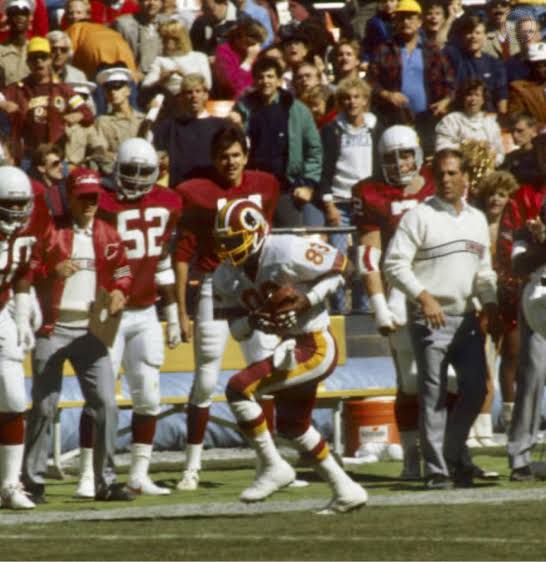
In 1987, the NFL went on strike. Then came the guys who weren’t supposed to be there.
Imagine getting up on a Monday morning, heading to your regular job, and finding out there’s a chance you might be playing professional football by Sunday.
No, this wasn’t a movie starring Keanu Reeves. Although, considering what happened next, Hollywood eventually decided it was worth borrowing the idea.
Welcome to the NFL’s replacement-player era of 1987.
When the regulars walked out
On September 22, 1987, NFL players went on strike during a labor dispute over free agency and player rights. The league decided the show must go on, and after canceling one week of games, it brought in replacement players to keep football on television.
Suddenly, the NFL was recruiting a collection of former college players, guys who had missed their shot at the big time, and athletes who were a long way from the league’s usual Sunday afternoon spotlight.
These weren’t the household names plastered across trading cards and cereal boxes. Some had day jobs. Some had played in obscure leagues. Some were simply hoping for one last chance to prove they could compete.
And now they were being asked to block NFL linebackers.
What could possibly go wrong?
The games began on October 4, and the results were a strange mix of lopsided contests, empty seats, labor politics, and football that was occasionally better than anyone expected.
Enter the Washington “Scabskins”
If there was one team that turned this bizarre experiment into legitimate sports history, it was the Washington Redskins.
Under coach Joe Gibbs, Washington assembled a replacement roster that went 3-0 during the strike. The victories helped push the team into first place in the NFC East, giving the regular players a valuable cushion when they returned.
The most memorable win came on Monday Night Football on October 19.
Washington traveled to Dallas to face the Cowboys, a hated rival whose lineup included established veterans such as Tony Dorsett, Randy White, and Ed “Too Tall” Jones.
Washington’s replacement quarterback, Tony Robinson, helped lead the team to a stunning 13-7 victory.
Think about that for a second.
The Cowboys had recognizable NFL stars. Washington had a roster of replacements who had been thrown together during a labor dispute. And somehow, the replacements walked out of Texas Stadium with a win.
For a few days, the football world had a new collection of unlikely heroes.
Of course, the nickname wasn’t exactly flattering. The replacement Redskins became known as the “Scabskins,” a reference to the resentment surrounding players who crossed the picket line.
The name stuck. So did the controversy.
Not everybody was chasing glory
It’s tempting to remember the replacement players as a collection of lovable underdogs who got their big break.
The reality was more complicated.
For the striking players, the dispute was about their livelihoods, their rights, and their ability to negotiate a better future. Bringing in replacements was viewed as an attempt to undermine their leverage.
For the replacements, the opportunity was almost impossible to ignore. Professional football careers are short, and for players who had come close but never made it, the NFL was offering a door that might never open again.
Some replacement players eventually earned opportunities with regular NFL teams. Others disappeared from the football landscape almost as quickly as they had arrived.
And plenty were left dealing with the stigma of having crossed the picket line.
They had played in the NFL. They had faced some of the best athletes in the world. Yet for many, the experience came with an asterisk that lasted far longer than their playing careers.
The most awkward Super Bowl story ever?
Here’s where the story gets even stranger.
The strike ended, the regular players returned, and Washington continued its march toward the postseason.
The Redskins eventually defeated the Denver Broncos 42-10 in Super Bowl XXII, capturing the franchise’s second championship.
But the replacement players who had helped keep the season afloat were largely gone by then. Most didn’t receive the same championship recognition as the players who finished the season.
Imagine helping a team survive three crucial games, watching that team win the Super Bowl, and then being left out of the celebration.
For years, the replacement players’ contributions remained an uncomfortable footnote in Washington’s championship history.
In 2018, more than 30 years after the strike, the franchise finally presented Super Bowl rings to 25 of its 1987 replacement players.
It was a long-overdue acknowledgment that their part in the championship season mattered, too.
The forgotten football season
The 1987 replacement-player experiment lasted only a few weeks, but it exposed a fascinating side of professional sports.
The NFL was a business, the players were fighting for their future, and a group of outsiders suddenly found themselves caught in the middle of a labor battle much bigger than any one game.
Some became cult heroes. Some found second chances. Others were remembered primarily for a label they never quite escaped.
And for a brief stretch in October 1987, the biggest football league in America was asking fans to watch a collection of men most of them had never heard of.
The games counted in the standings. The wins mattered. And in Washington, they helped pave the way to a championship.
So the next time someone tells you the NFL has always been a perfectly polished machine, remember the Scabskins.
Remember the guys who went from chasing a football dream to facing the Dallas Cowboys on Monday Night Football.
And remember that somewhere in America, there was a guy who might have been working a regular shift on Friday and tackling Tony Dorsett by Monday.
That’s the NFL’s replacement-player era: one of the strangest, messiest, and most wonderfully unbelievable chapters in football history.


Leave a Reply