Imagine the year is 1862.
The country is tearing itself apart. Soldiers are marching through mud, writing letters home, and wondering whether they’ll ever see their families again.
And somewhere in a military camp, a guy is looking for a bat and a ball.
Because even during the Civil War, Americans found time for baseball.
By the time the war began in 1861, baseball was already growing in popularity, particularly in the Northeast. As thousands of young men entered military service, they brought the game with them. During quiet stretches between campaigns, soldiers organized games to escape the boredom of camp life.
Officers often encouraged these activities, recognizing that exercise and friendly competition could help morale. And for a few hours, the war could take a back seat to a different kind of battle: getting a runner home.
Baseball even found its way into Confederate prison camps.
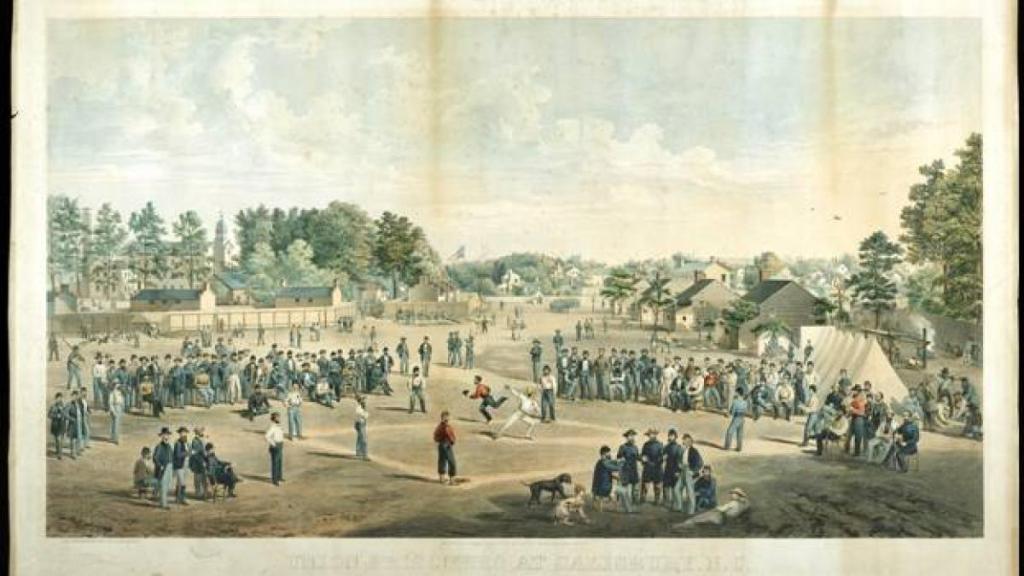
At Salisbury Prison in North Carolina, Union prisoners played baseball during 1862. An illustration by prisoner Otto Boetticher captured the remarkable scene, preserving one of the best-known images of the game during the war.
Think about that for a moment. Men held captive during one of America’s bloodiest conflicts were finding a way to play a game that, in some small way, reminded them of home.
The war also helped baseball spread beyond the cities where it had first become popular. Soldiers from different regions learned the game from one another, then carried it back to their hometowns when the fighting ended.
And here’s the part worth remembering: baseball didn’t begin because of the Civil War, and the game certainly couldn’t erase the horrors of it. But the conflict helped transform a growing pastime into a truly national game.
As we get set for the World Series this weekend, it’s a good time to remember how woven into the fabric of American culture baseball is.
Americans were playing baseball in the middle of the Civil War.
Turns out, the national pastime has always been pretty good at finding a way to carry on.


Leave a Reply