Appalachian State. Stanford. The Curse of No. 2. Two-loss LSU. Kansas and Missouri fighting for the universe. Welcome to the most gloriously ridiculous college football season ever.
There are college football seasons you remember because of the champion.
There are seasons you remember because of the dynasty.
And then there was 2007.
A season that seemed to be written by a committee of sleep-deprived screenwriters who had consumed too much coffee, watched too many late-night highlights, and finally decided that the laws of college football no longer applied.
Ranked teams fell like dominoes. National championship contenders developed mysterious allergies to winning. Coaches stared into the middle distance. And somewhere in America, a Michigan fan began a relationship with a stress ball that continues to this day.
Welcome to 2007, when college football didn’t just deliver the unexpected.
It turned the entire sport into a weekly episode of The Twilight Zone.
Chapter One: Appalachian State Opens the Portal to Chaos
September 1, 2007.
Michigan Stadium. The Big House. More than 100,000 people. A proud Michigan program entering the season ranked No. 5 in the country.
The opponent? Appalachian State.
The Mountaineers were a powerhouse at the FCS level, having won the previous two national championships. But this was Michigan. This was the Big Ten. This was supposed to be a comfortable afternoon before the Wolverines moved on to more important business.
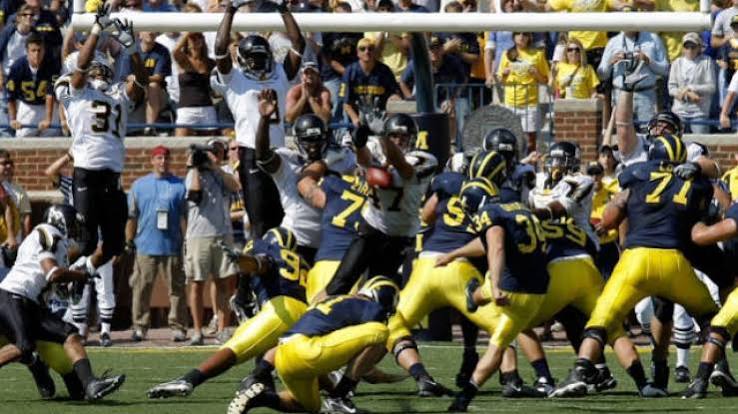
Instead, Appalachian State won 34–32.
The Mountaineers blocked Michigan’s final field-goal attempt, and the unthinkable became reality. An FCS program had walked into one of college football’s most intimidating stadiums and knocked off a top five team. Sports Illustrated’s retrospective later ranked it among the greatest upsets in the sport’s history.
Michigan fans had entered September thinking about a national championship.
They left wondering whether the season needed to be canceled.
The best part? We were only getting started.
Chapter Two: Stanford Takes a Trip to Hollywood
If Appalachian State had shaken the sport, Stanford arrived a month later and started pulling down the wallpaper.
October 6. USC. The Los Angeles Coliseum.
The Trojans were ranked No. 2 in the AP poll, loaded with talent, and widely viewed as national championship favorites. Stanford, meanwhile, had finished 1–11 the previous season and entered the game 1–3.
USC was favored by an astonishing 41 points.
Forty-one.
That’s not a point spread. That’s the kind of number you see when your buddy insists on playing Madden with the difficulty turned all the way down.
Stanford’s starting quarterback, Tavita Pritchard, was making his first career start. The Cardinal were expected to provide a useful afternoon of practice for Pete Carroll’s Trojans.
Instead, Pritchard threw a fourth-down touchdown pass with 49 seconds remaining, and Stanford stunned USC 24–23. <cite>Sports Illustrated</cite> documented the upset’s extraordinary circumstances in its ranking of college football’s greatest shocks.
Just like that, the Trojans’ home winning streak ended.
Jim Harbaugh, Stanford’s young head coach, had announced himself to the college football world.
And the national championship conversation had another crater in it.
Remember when we thought Appalachian State was the season’s defining upset?
Adorable.
Chapter Three: The Curse of No. 2
By October, being ranked No. 2 was beginning to look like a public-health hazard.
USC fell to Stanford. California lost to Oregon State. South Florida went down to Rutgers. Boston College fell to Florida State. Oregon lost to Arizona.
Then came Kansas and West Virginia.
It wasn’t simply that good teams were losing. It was that the teams losing were often positioned right on the doorstep of a national championship.
The No. 2 ranking had become a warning label.
In the final nine weeks of the regular season, the AP’s No. 2 team lost seven times. During the season, unranked or lower-ranked opponents defeated higher-ranked teams 59 times in the regular season.
The weekly routine became almost comical.
Monday: Here’s your new national championship contender.
Saturday: Never mind.
Sunday: Meet your new national championship contender.
Repeat until December.
Every poll felt like a freshly printed invitation to disaster.
And if your team climbed to No. 2, you didn’t celebrate.
You started checking the schedule for Arizona State, Rutgers, or somebody’s angry rival with nothing left to lose.
Chapter Four: The SEC’s Most Chaotic Family Reunion
While the rest of the country was busy destroying its championship hopes, LSU was having a season that defied conventional explanation.
The Tigers had talent everywhere, a ferocious defense, and an offense capable of producing spectacular moments. They also had a remarkable ability to make perfectly manageable football games feel like emergency situations.
LSU lost to Kentucky in triple overtime, 43–37.
Then the Tigers lost to Arkansas in triple overtime, 50–48.
Both games were the sort of contests that left you wondering whether anyone involved had ever heard of finishing a game in regulation.
But here’s the twist: LSU kept surviving long enough to remain in the championship conversation.
The Tigers won the SEC and reached the BCS National Championship Game despite having two regular-season losses.
On January 7, 2008, LSU defeated Ohio State 38–24 to claim the national title, becoming the first two-loss team to win the BCS championship.
Les Miles, affectionately known as the Mad Hatter, had somehow navigated the season’s wreckage and emerged with the trophy.
If you had pitched this story in August, somebody would have told you to make it more believable.
Chapter Five: Kansas and Missouri Nearly Take Over America
Here’s a sentence that sounds like it escaped from an alternate universe:
Kansas and Missouri entered the final weekend of the 2007 regular season with legitimate national championship hopes.
Kansas! Missouri!
No disrespect intended. Both teams were excellent. But the idea that these two programs would become central characters in the national title race was precisely the sort of thing that made 2007 so memorable.
Missouri, led by quarterback Chase Daniel, built an explosive offense. Kansas, under Mark Mangino, put together a breakthrough season that took the Jayhawks to 11–1 in the regular season.
Their rivalry game was played at Arrowhead Stadium on November 24, with Missouri winning 36–28.
It was a massive game, a regional rivalry suddenly carrying national championship implications.
Missouri reached No. 1 in the polls.
Kansas, despite its outstanding season, was left watching the championship picture slip away.
Then came the Big 12 Championship Game.
Missouri needed one more victory to strengthen its national title case. Oklahoma had other ideas, beating the Tigers 38–17.
In the space of two weeks, Missouri had gone from the top of the college football world to the outside of the BCS championship game.
The 2007 season didn’t just punish the favorites. It made sure the newcomers got a taste of the madness, too.
Chapter Six: West Virginia’s Nightmare Ending
If you wanted a single game that captured the cruel absurdity of the season, look no further than December 1.
West Virginia entered its rivalry showdown against Pittsburgh with a chance to punch its ticket to the BCS National Championship Game.
The Mountaineers were heavily favored. Pittsburgh was 4–7.
This was supposed to be a celebration in Morgantown.
Instead, the Panthers won 13–9.
West Virginia couldn’t get the job done against a rival that had struggled for much of the season, and its national championship dream disappeared on the final weekend of the regular season.
It was the kind of loss that makes a fan question every decision made since childhood.
Why did I choose this school? Is it too late to become a fan of a team in another sport?
And just like that, another championship contender was gone.
The final weekend also saw Oklahoma defeat top-ranked Missouri in the Big 12 title game. Both results helped clear the path for LSU and Ohio State to meet for the national championship.
In any other season, either result would have been a defining shock.
In 2007, they were practically part of the weekly programming schedule.
The Final Verdict: We May Never See Another One Like It
The beauty of 2007 wasn’t simply the upsets.
It was the accumulation of them.
Appalachian State stunned Michigan. Stanford stunned USC. No. 2 became the most dangerous ranking in America. Kansas and Missouri became championship contenders. West Virginia fell in the Backyard Brawl. LSU survived a season that seemed determined to eliminate every possible national champion.
And through it all, college football remained gloriously unpredictable.
There was no playoff to settle the arguments. There was no expanded bracket to give every contender a clearer path. There was the BCS, a handful of polls and computer rankings, and a nation of fans trying to figure out what on earth they had just watched.
The season ended with LSU holding the trophy, Ohio State finishing second, and a whole lot of fans convinced their team had been one Saturday away from changing history.
Maybe that’s why 2007 still feels so special.
It reminded us that college football’s greatest moments don’t always come from the best teams. Sometimes they come from the teams nobody expected, the games nobody saw coming, and the Saturdays when the entire sport seems to lose its collective mind.
So here’s to 2007.
The year the rankings were suggestions, the favorites were nervous wrecks, and the phrase “Anything can happen” finally stopped sounding like a cliché.
Because in 2007, anything didn’t just happen.
Everything happened. And somehow, LSU won the whole thing.


Leave a Reply