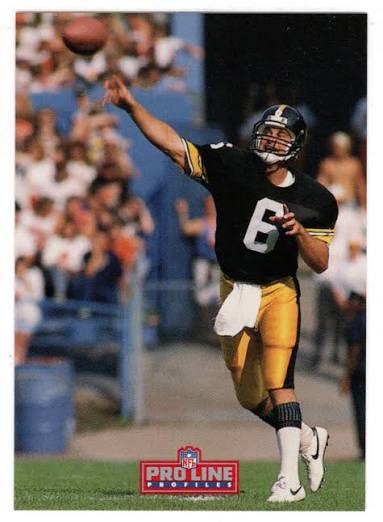
There was a time in the NFL when every team seemed to have a backup quarterback who had somehow been starting games for the previous 14 years.
You know the type.
He was 34 years old. He had played for six teams. He wore a knee brace. And if your starting quarterback went down in Week 7, you weren’t totally worried.
Because Steve DeBerg was available.
The 1990s were the golden age of the veteran backup quarterback.
There was Frank Reich, who once came off the bench and engineered one of the greatest comebacks in NFL history…in a playoff game!
Vinny Testaverde bounced around the league long enough to become the answer to countless football trivia questions.
Wade Wilson seemed to have been on an NFL roster since the invention of the forward pass.
Then there was Jeff Hostetler, who somehow went from backup quarterback to Super Bowl champion with the Giants.
And let’s not forget Bubby Brister, Billy Joe Tolliver, Eric Hipple, Scott Mitchell, Dave Krieg, and a seemingly endless supply of guys who could walk into a huddle on Sunday and say:
“Don’t worry, I’ve got this.”
They weren’t necessarily stars.
They were something more useful.
They were survivors.
These quarterbacks knew the system, knew how to read a defense, and—most importantly—had already been through enough NFL misery that absolutely nothing could surprise them anymore.
Today, teams develop young quarterbacks for years and build entire franchises around them.
Back then?
Sometimes your quarterback situation was basically:
Starter: Injured.
Backup: 36 years old.
Third string: A guy who played quarterback at Northern Iowa in 1987.
Coach: “We’ll be fine.”
And somehow…they usually were.
The 1990s backup quarterback may not have sold many jerseys.
But he kept the season alive.
And if you watched enough football in the ’90s, you probably can’t see a team announce its starting quarterback is out without wondering:
“Is Frank Reich still available?”
 Sports Americana
Leave a comment