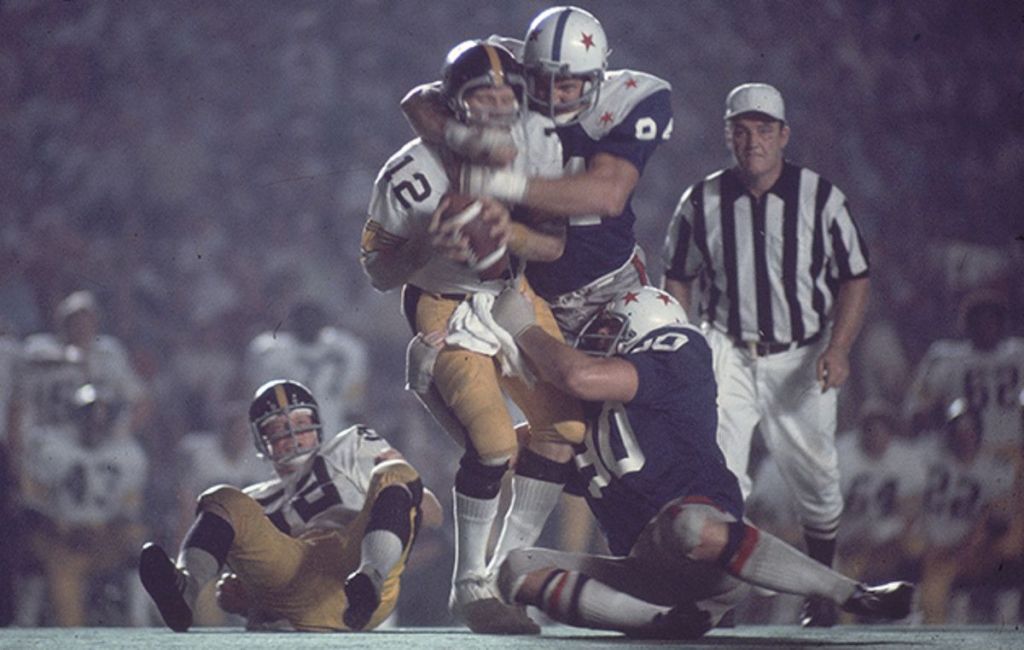
There was a time when an NFL preseason game could draw more than 100,000 people.
No, this wasn’t the Super Bowl.
It was the College All-Star Game, an annual summer tradition that pitted the defending NFL champion against a team made up of the best recently graduated college football players. And for more than four decades, it was a pretty big deal.
The idea came from Chicago Tribune sports editor Arch Ward, who helped create the game in 1934 as a charitable event. The first matchup was played at Chicago’s Soldier Field on August 31, 1934, with the defending champion Chicago Bears facing the college stars.
Nearly 80,000 people showed up.
The game ended in a 0-0 tie.
Apparently, nobody told them preseason football was supposed to be boring.
The concept quickly caught on. Beginning in 1936, the college stars faced the defending NFL champion from the previous season. The game became an annual showcase of the country’s top college talent—and a chance to test themselves against the pros.
And surprisingly, the college kids could hang.
The College All-Stars won their first game in 1937, upsetting the Green Bay Packers 6-0. The following year, they beat Washington 28-16. By the end of the 1947 season, the All-Stars had won five games and tied two in the first 14 meetings.
These weren’t exactly glorified scrimmages.
They featured some of the biggest names in football history. Sammy Baugh played for the All-Stars in 1937. Future Hall of Famers and NFL legends routinely participated. Even future President Gerald Ford suited up for the college team in the 1935 game.
And then there were the crowds.
Soldier Field became the summer home of the event, with crowds routinely approaching or exceeding 90,000. More than 100,000 fans attended the games in 1942, 1947 and 1948. Think about that for a moment: 100,000 people attending an NFL preseason game.
The game also served an important purpose for professional football. In the 1930s, college football was still arguably more popular than the NFL. The College All-Star Game gave the young professional league an opportunity to put its best players on the field against the college stars everyone already knew.
It was football’s version of settling an argument.
Eventually, though, the novelty wore off.
The NFL became bigger, more powerful and more popular. The gap between professional and college football grew. The All-Stars became increasingly less competitive, winning only four of their final 28 games. Meanwhile, NFL coaches became increasingly reluctant to risk their players—or their prized rookies—in a preseason exhibition. Insurance costs and player salaries also made the game increasingly difficult to stage.
The final game was played in 1976.
The Pittsburgh Steelers, fresh off their Super Bowl championship, were leading the College All-Stars 24-0 when a massive thunderstorm turned Soldier Field into something resembling a swimming pool. The game was called in the third quarter.
And just like that, one of football’s strangest traditions was over.
In 42 games, the NFL champions finished with 31 wins, nine losses and two ties.
Today, the idea of sending the defending Super Bowl champion onto the field against a collection of college stars seems almost absurd.
Back then, it was one of the biggest football events of the year.
That’s what makes the College All-Star Game so fascinating.
It wasn’t just a preseason game.
It was a snapshot of a different football world—one where college football stars were celebrities, professional football was still proving itself, and 100,000 people might show up in Chicago to find out whether the best college players in America could beat the NFL champions.
For more than 40 years, they kept asking the question.
And football fans kept showing up for the answer.


Leave a Reply